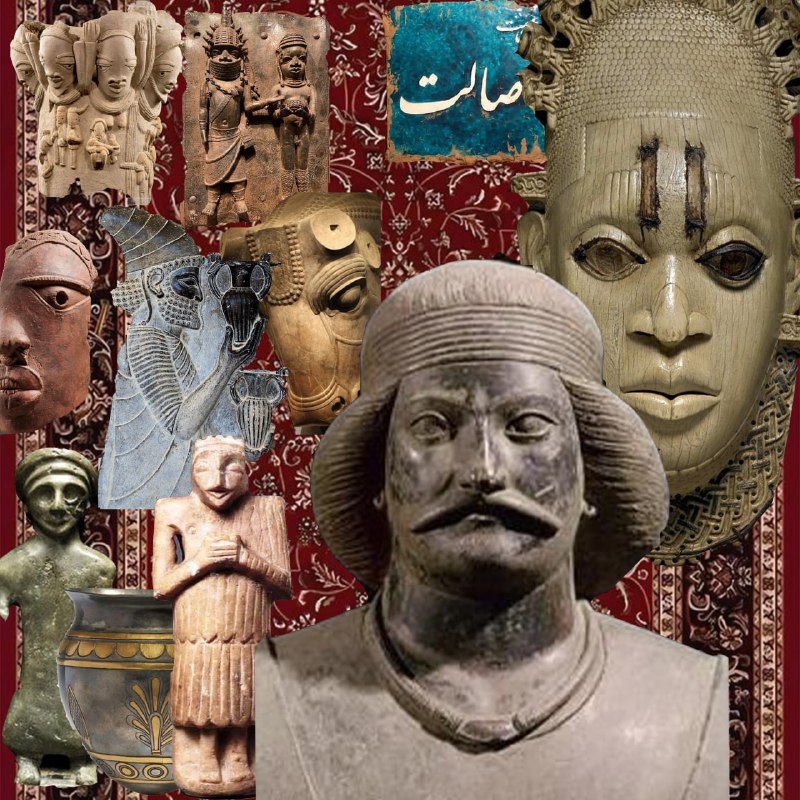
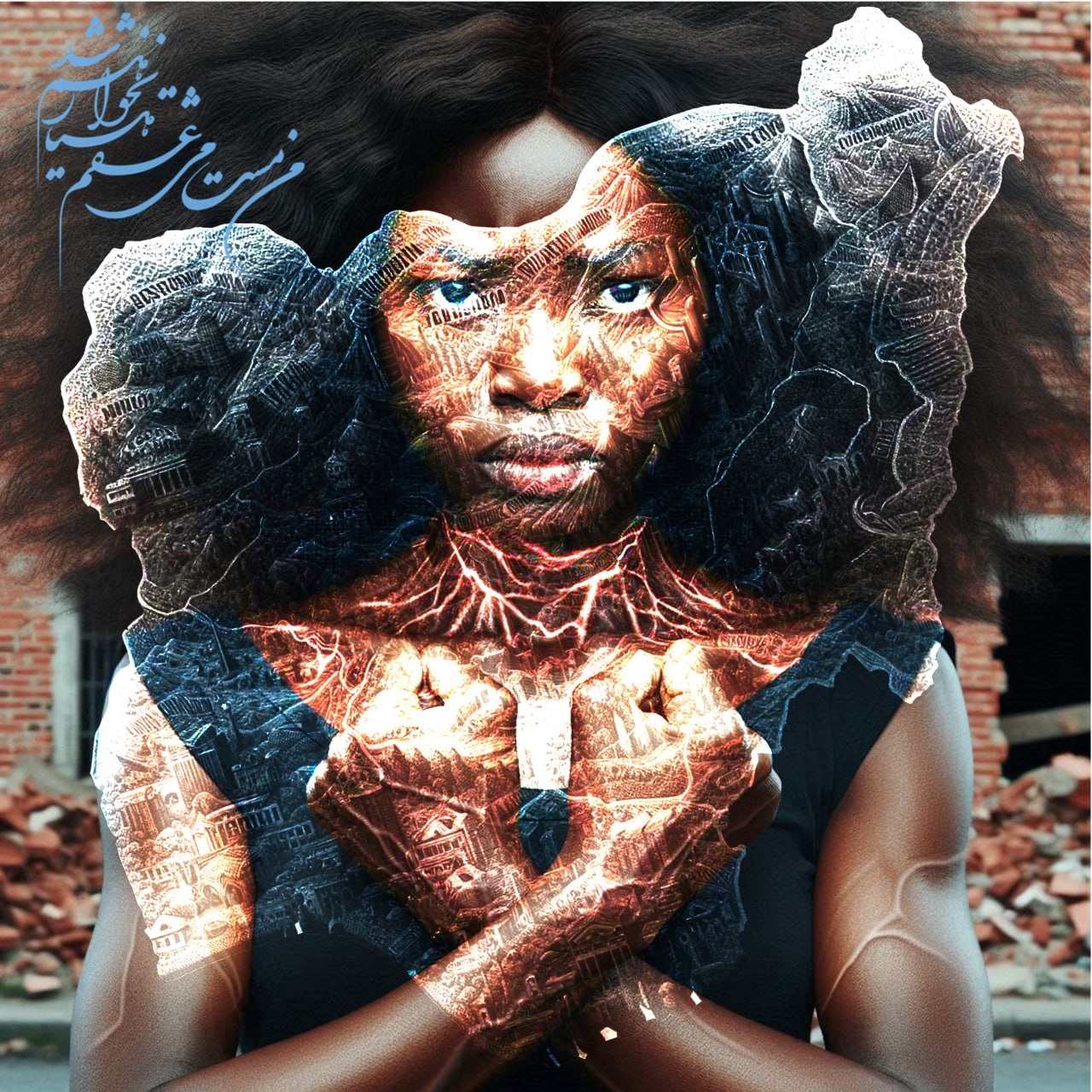
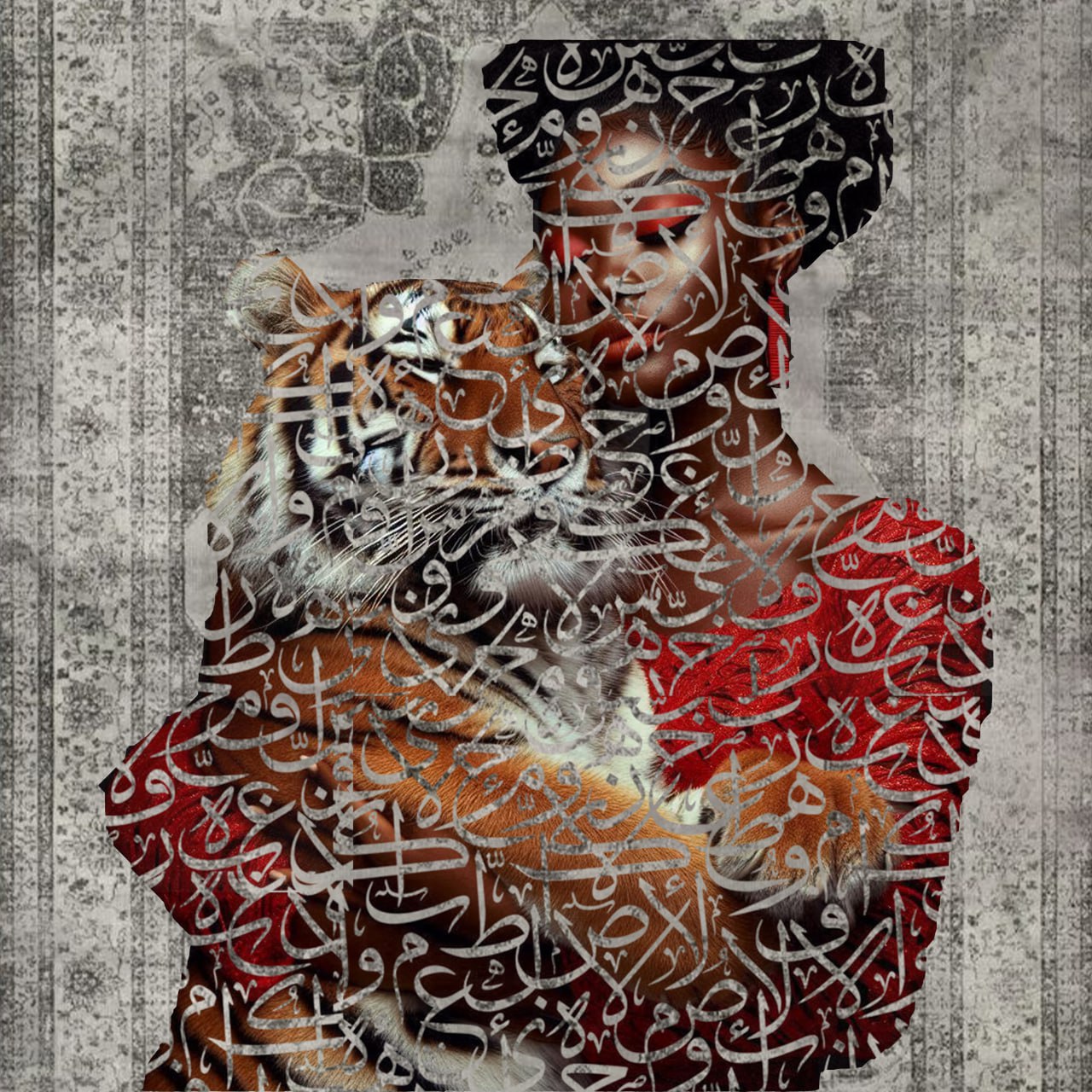
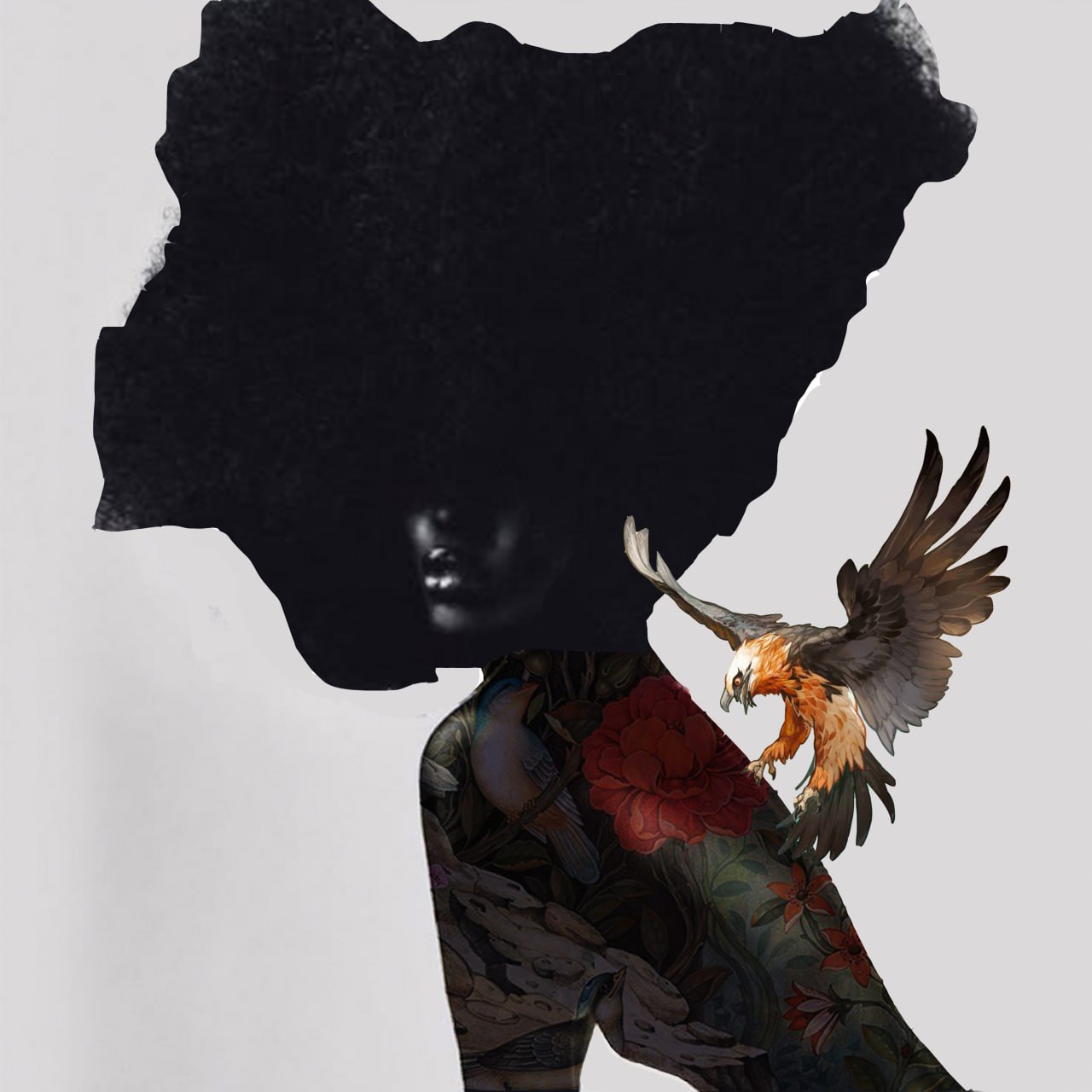
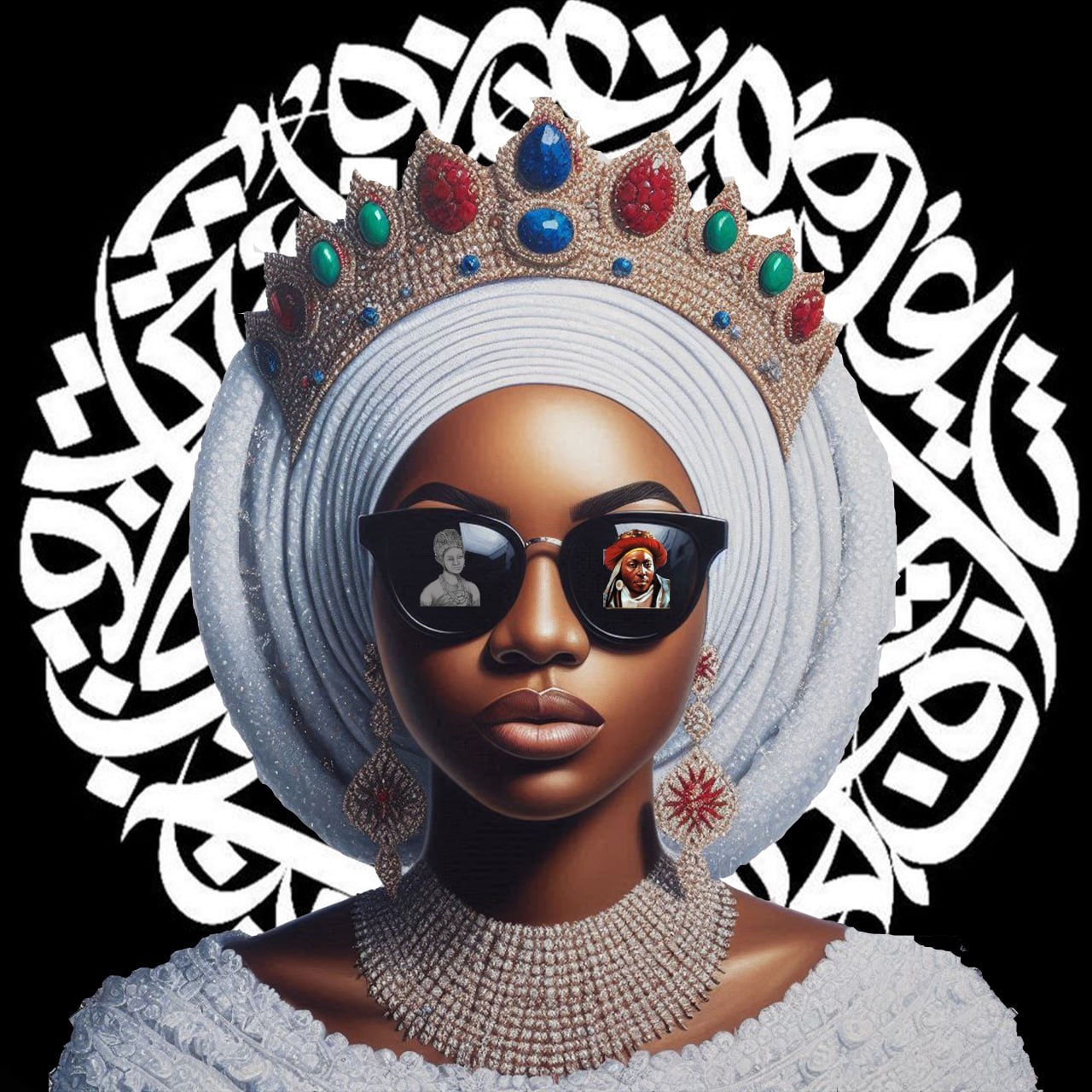
This work is a conceptual digital collage that shows a kind of confrontation or dialogue between cultures by combining sculptures from different civilizations. Its style can be classified as conceptual art, because it examines the concept of authenticity, identity and civilization by creating contrast and combining historical elements from different parts of the world. Overall, this work is an attempt to show the glory of ancient civilizations and their mutual influence on each other. Image details and main elements: Central statue (front): • A stone Sardis of an Iranian warrior or commander from the Parthian period.in the back is sculpture of idia benin kingdome ,Clay figurines from the Yoruba civilization, the Nook civilization,Achaemenid civilization and Elam civilization The Iranian hand-woven carpet in the background shows the connection of this combination with Iranian culture. • Carpet is a symbol of identity, tradition and authenticity of Iranians and along with historical elements, it strengthens the sense of unity between past and present.A small sign with the word “authenticity”: • This element clearly reinforces the image’s message and points to the importance of roots and cultural heritage. Overall, this work is an attempt to show the glory of ancient civilizations and their mutual influence on each other. The Nok Civilization is one of the oldest and most significant civilizations in Africa, emerging in what is now northern Nigeria. Flourishing between approximately 1500 BCE and 500 CE, it is renowned for its terracotta sculptures and its influence on later African cultures. The Yoruba civilization is one of the most significant and influential civilizations in West Africa, primarily located in present-day Nigeria, Benin, and Togo. This civilization has thrived from ancient times to the present and is renowned for its sculptural art, complex social structures, and cultural influence. The Kingdom of Benin was one of the most powerful and advanced civilizations in West Africa, located in present-day southern Nigeria. It flourished from around the 11th century to the late 19th century, reaching its peak in the 15th and 16th centuries. The kingdom was known for its military strength, advanced political system, and extraordinary bronze artwork. The Achaemenid Empire was one of the greatest and most influential civilizations of the ancient world, founded by Cyrus the Great in 550 BCE. It was the first Persian Empire, known for its vast territorial expansion, advanced administration, cultural tolerance, and magnificent architecture. Elamite Civilization (3200–539 BCE) The Elamite civilization was one of the oldest civilizations in Iran, located in the southwestern region (modern-day Khuzestan, Ilam, and parts of Fars and Lorestan). It thrived from around 3200 BCE until its conquest by the Achaemenid Empire in 539 BCE. The Elamites played a crucial role in the culture, art, script development, and architecture of the region, leaving a lasting impact on later Iranian